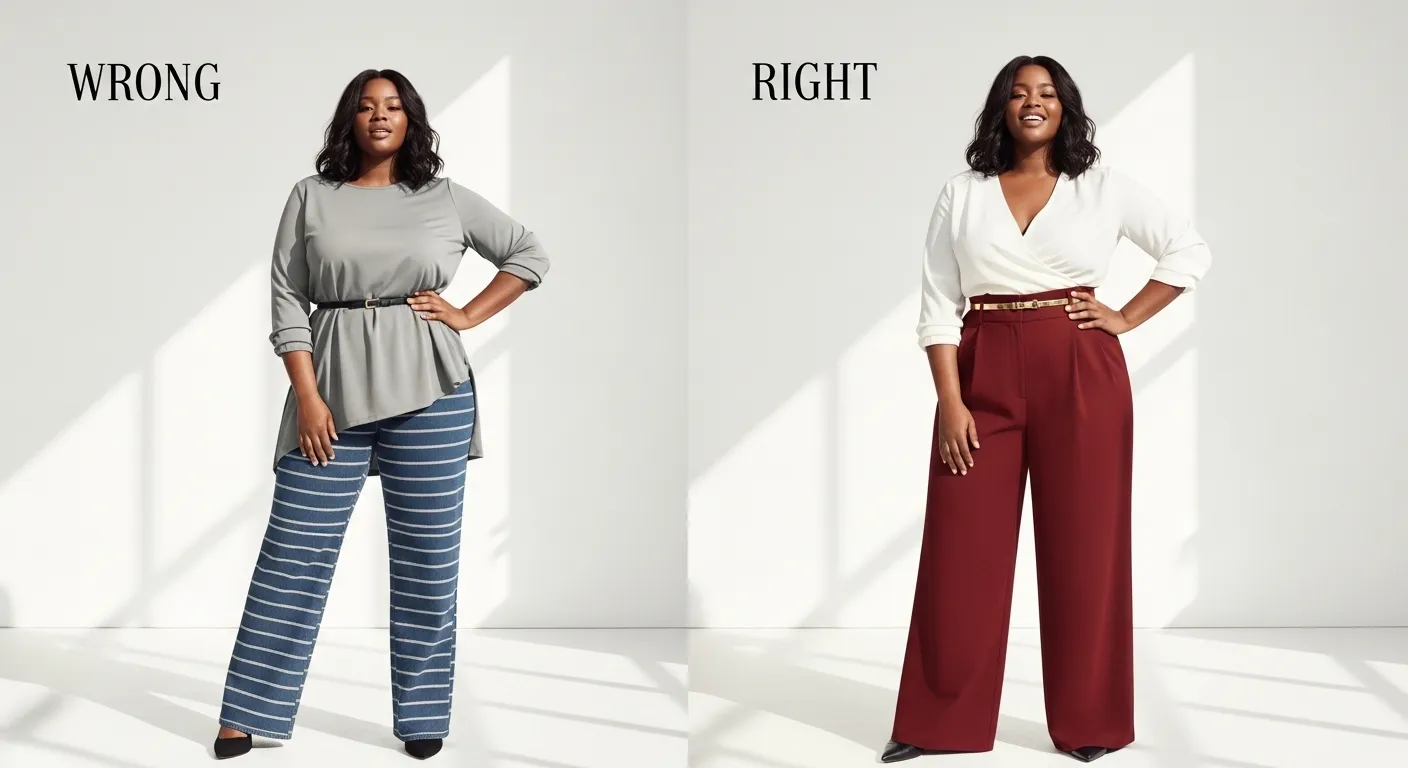
ou're not the problem. Your outfit choices might be.
Stop making these 10 outfit mistakes that make curvy women look wider. Discover what to wear instead to flatter your silhouette and own your curves with confidence!
💕 Plus Size Fashion Questions? Ask Isabella!
Style, outfits, looks, combinations, fashion tips... quick & caring answers.
💕 Top Plus Size Fashion Picks
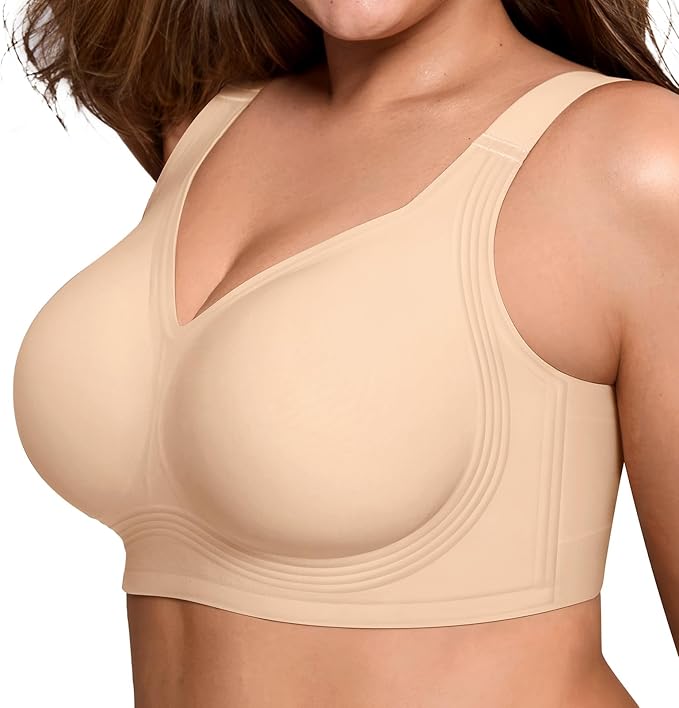
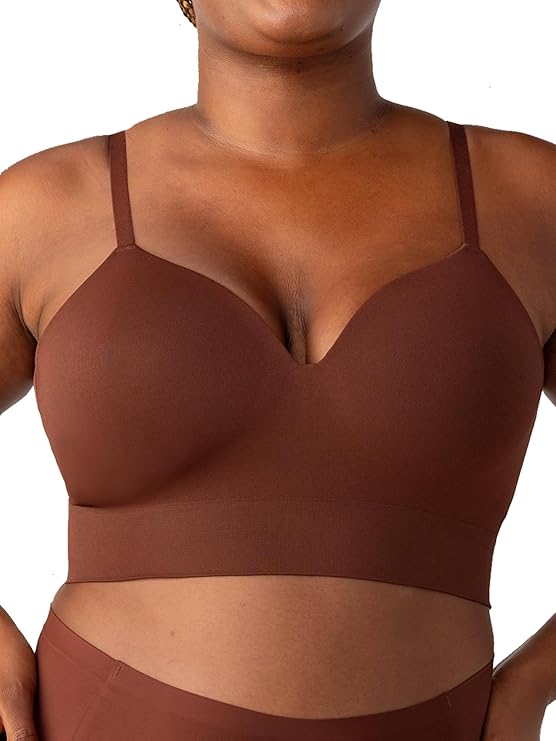
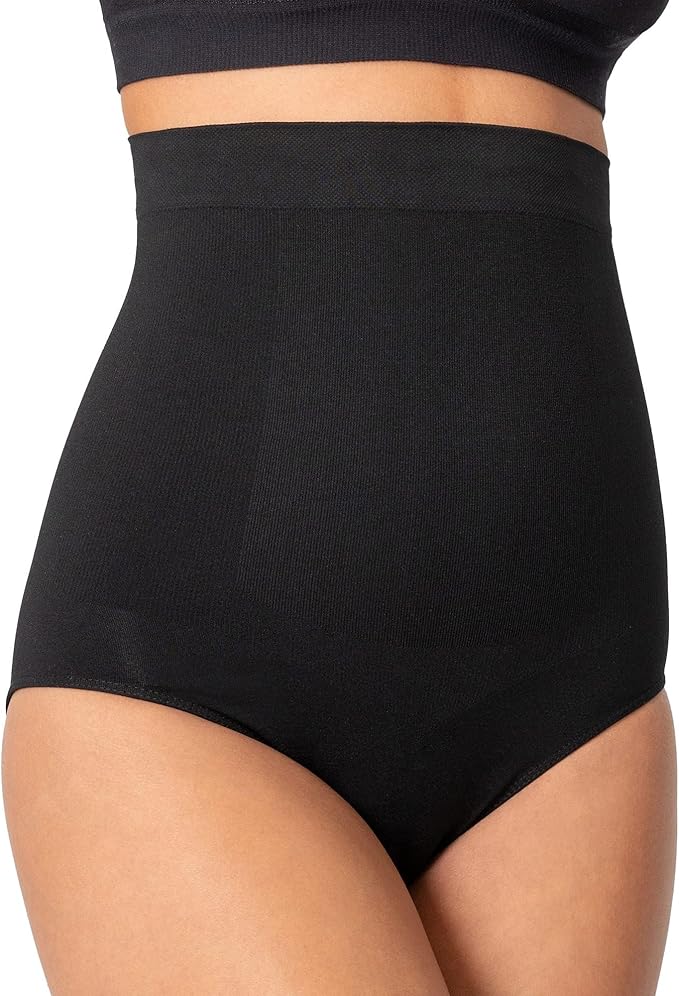
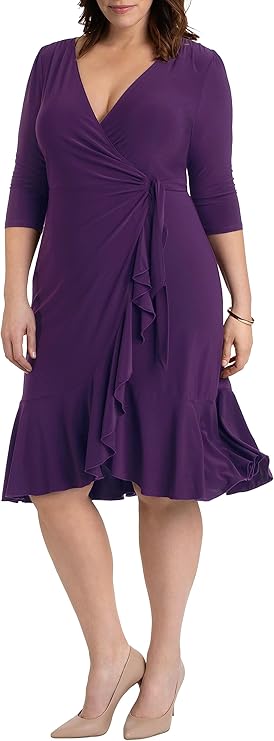
Handpicked products that fit and flatter curves









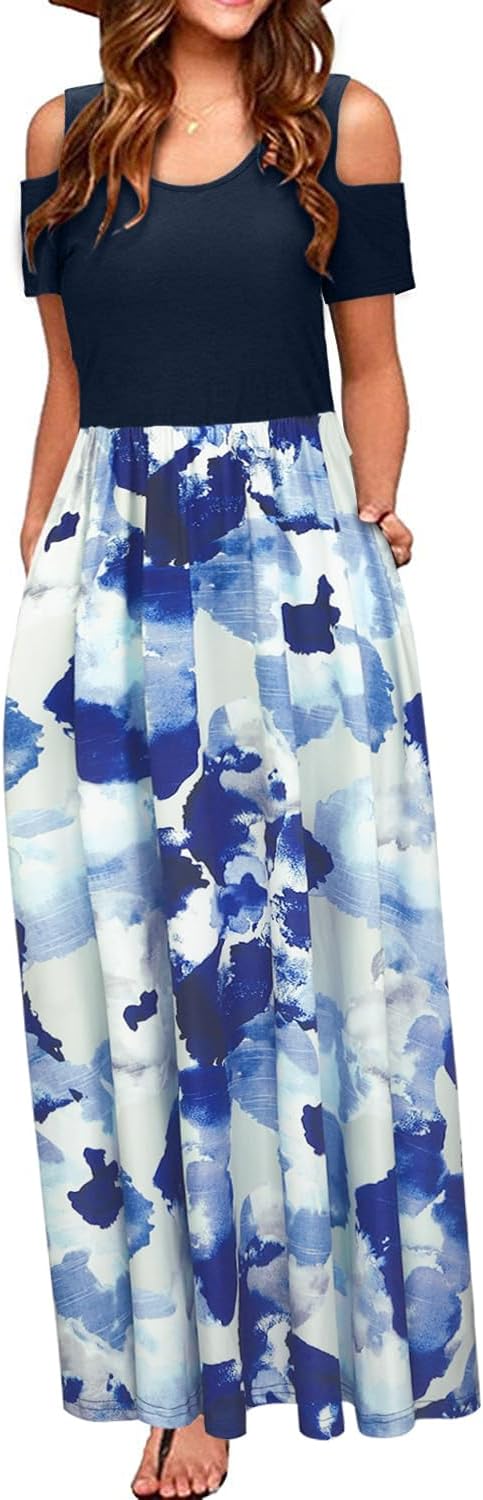
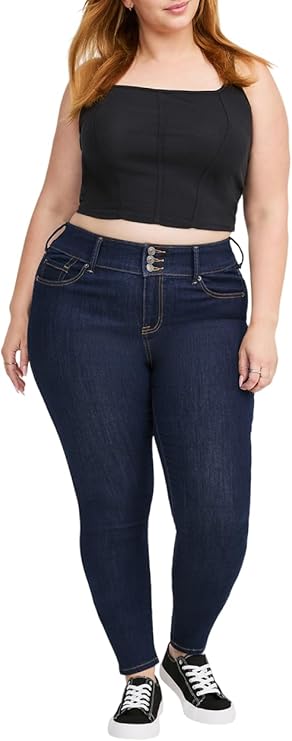


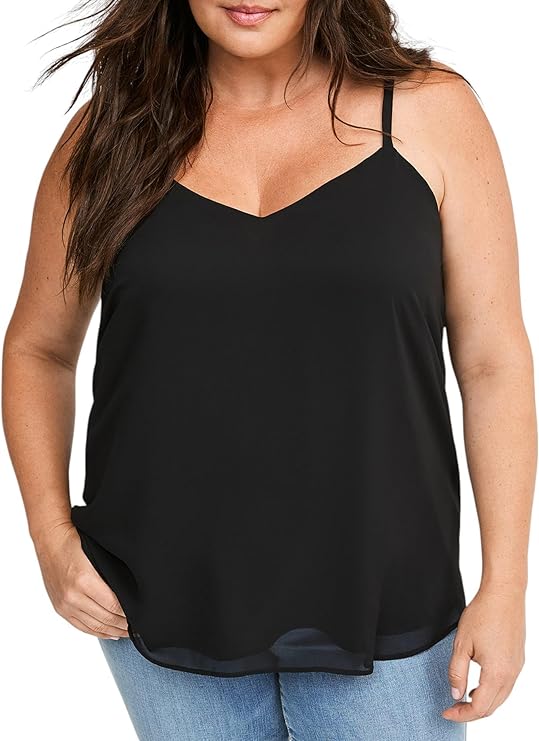
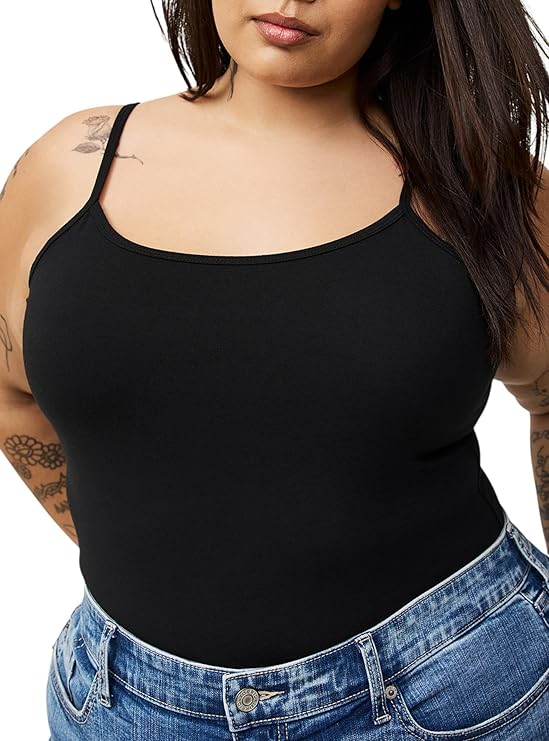
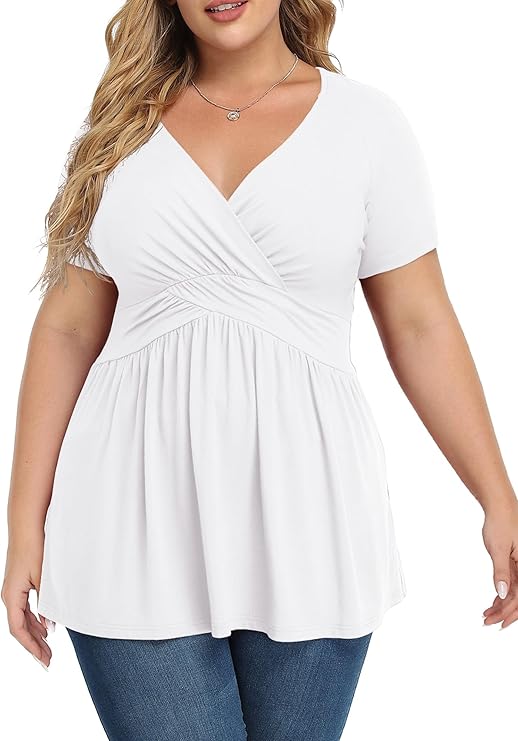
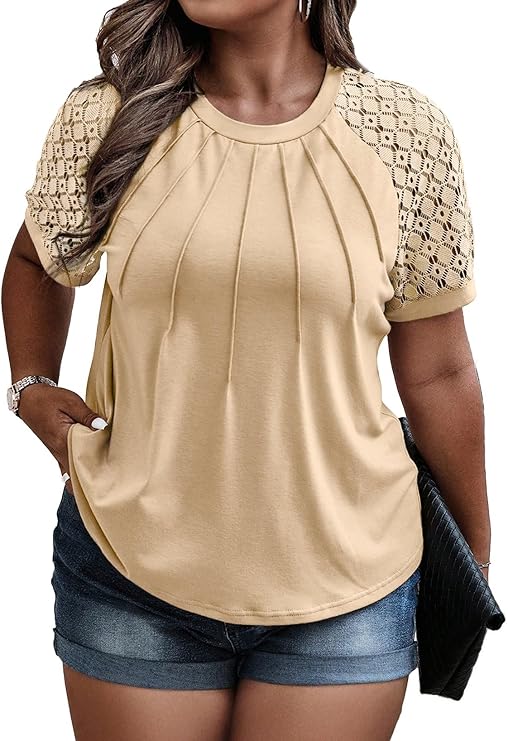


There's a particular kind of disappointment that happens in front of a mirror. You got dressed, you thought you looked fine, and then — in a fluorescent fitting room or an unexpected reflection in a shop window — something feels off. Not wrong, exactly. Just not right.
Here's what nobody tells you: most of the styling errors that add visual width to a curvy figure aren't about size at all.
They're about proportion, fabric behavior, and the way the eye moves across a silhouette. Fix those three things, and everything changes.
This is not a list of rules designed to make you smaller. It's a precision guide to making you look exactly as powerful, polished, and intentional as you are.
- Why Outfit Proportion Matters More Than Size
- Mistake #1: Wearing the Wrong Rise in Your Pants
- Mistake #2: Choosing Fabrics That Cling in the Wrong Places
- Mistake #3: Ignoring the Waist Entirely
- Mistake #4: Wearing Horizontal Stripes Across the Widest Points
- Mistake #5: Choosing the Wrong Neckline for Your Bust
- Mistake #6: Buying Clothes That Fit Your Hips But Gap at the Waist
- Mistake #7: Wearing Tops That End at the Widest Part of the Hip
- Mistake #8: Avoiding Color and Print Entirely
- Mistake #9: Choosing the Wrong Shoe with Midi and Maxi Lengths
- Mistake #10: Neglecting Fit in the Shoulders
- The Style Advisor's Secret Tip
- Quick Reference: Mistake vs. Fix
- FAQ: Curvy Women's Styling Questions Answered
- Internal Linking Suggestions
- The Confidence Manifesto: Stop Dressing Against Yourself
Why Outfit Proportion Matters More Than Size
Before we get into the mistakes, understand one foundational principle that professional stylists use with every client: the eye follows lines.
Horizontal lines expand. Vertical lines elongate. Diagonal lines create movement. And where there's contrast — a light color meeting a dark one, a fitted section meeting a voluminous one — the eye stops and lingers.
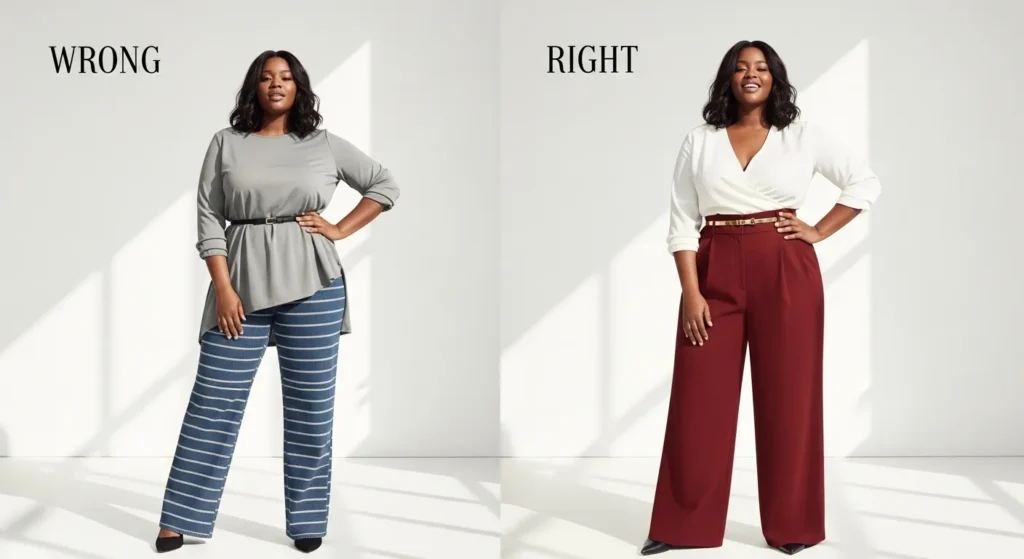
Every outfit mistake on this list violates one of those principles in a way that works against a curvy silhouette. Every solution redirects those lines to work for you.
Mistake #1: Wearing the Wrong Rise in Your Pants
The problem: Mid-rise pants on a curvy hourglass or pear figure cut directly across the widest part of the hip.
That horizontal interruption draws the eye sideways — exactly where you don't want it — and visually shortens the leg line simultaneously.
Mid-rise also creates a visual divide between your torso and legs at an unflattering point, making the body appear shorter and blockier than it is.
What to wear instead: High-rise pants, skirts, and shorts that sit at or just above the natural waist. The natural waist is your narrowest point.
Anchoring your bottoms there creates an immediate hourglass emphasis and gives your legs a longer, leaner visual line.
The inseam rule: For plus size women under 5'5", look for a 28–30 inch inseam in wide-leg or straight-leg styles.
For women 5'6" and above, a 30–32 inch inseam prevents the cropped-leg effect that shortens the silhouette.
Amazon picks to look for: High-rise wide-leg trousers, high-rise ponte pants, high-waisted A-line skirts in sizes 1X–4X.
Mistake #2: Choosing Fabrics That Cling in the Wrong Places
The problem: Thin jersey, cheap polyester, and low-quality spandex blends do one thing consistently: they cling to every surface they touch.
On a curvy body, this means every fold, every bump, and every area of natural roundness gets highlighted simultaneously.
The result is an outfit that looks messy rather than fitted — and there's an important difference between those two things.
Fitted means the fabric skims the body with intention. Cling means the fabric is fighting the body for dominance, and losing.
What to wear instead: Fabrics with natural drape and weight. Bamboo jersey, ponte knit, matte crepe, quality cotton-modal blends, and woven rayon all fall away from the body rather than gripping it. They skim curves beautifully without adding visual bulk.
The touch test: Before buying any knit fabric, hold it up and let it hang. If it falls in a clean, fluid line, it will drape well on your body. If it snaps back or holds its shape stiffly, it will cling.
Mistake #3: Ignoring the Waist Entirely
The problem: This is the single most common — and most damaging — mistake curvy women make. The loose tunic, the oversized blouse, the flowy top worn untucked and unstyled: these silhouettes drape
straight down from the widest point of the bust or hip and completely eliminate the waist from the visual equation.
Without a defined waist, the eye reads the body as one continuous rectangular block — regardless of how dramatic your actual waist-to-hip differential is.
What to wear instead: Always anchor your outfit at your narrowest point. This doesn't mean a tight belt cinching uncomfortably. It means:
- A wrap silhouette that ties at the natural waist
- A half-tuck of your blouse into your high-rise bottoms
- A longline cardigan left open over a fitted base that defines the waist beneath it
- A structured waistband on your skirt or pants that sits at the natural waist
The stylist's rule: If you can't see your waist in your outfit, the outfit isn't working for your body type. Find the waist or create it.
Mistake #4: Wearing Horizontal Stripes Across the Widest Points
The problem: Horizontal stripes are not inherently unflattering on curvy bodies — but their placement matters enormously.
A wide horizontal stripe across the fullest part of the bust, hip, or stomach will visually expand that area. This is simple optical physics, not opinion.
What to wear instead: If you love stripes — and you should, because they're classic — wear them strategically:
- Thin pinstripes run vertically and elongate the entire body
- Horizontal stripes on the upper body only, ending above the bust, draw the eye upward toward the face
- Color-blocked outfits with darker shades at the widest points and lighter shades at narrower areas use contrast intentionally
- Diagonal stripes create movement and visual energy without the expanding effect of pure horizontals
Mistake #5: Choosing the Wrong Neckline for Your Bust
The problem: High necklines — crew necks, boat necks, turtlenecks — on a larger bust create a visual wall of fabric across the chest.
The eye reads a large expanse of unbroken fabric as width. Additionally, high necklines on curvy women often pull and distort at the bust, creating fabric tension that's both uncomfortable and visually unflattering.
What to wear instead: Necklines that open the chest and create vertical visual length:
- V-necks — the deeper the V, the more elongating the effect
- Wrap necklines — create a natural V while also defining the waist
- Scoop necks — softer than a V, equally effective at opening the chest
- Square necklines — incredibly flattering on hourglass figures, drawing attention upward to the collarbone
The bonus: Open necklines allow you to add layered necklaces — one of the easiest styling upgrades for curvy women because the jewelry draws the eye vertically down the center of the body.
Mistake #6: Buying Clothes That Fit Your Hips But Gap at the Waist
The problem: Standard sizing in the US is built on a waist-to-hip differential of approximately 10 inches. Most curvy and plus size women have a differential of 12–16 inches or more.
This means that pants, skirts, and dresses sized to fit the hip will consistently gap, pull, or sit incorrectly at the waist.
Wearing clothes that fit incorrectly — even if the size "should" work — always looks worse than wearing correctly fitting clothes in a larger size.
What to wear instead: Three solutions that actually work:
- Seek curvy-fit or hourglass-fit clothing lines that are pattern-drafted for a larger waist-to-hip differential
- Size up and tailor — a $15–$25 waist alteration on pants or a skirt transforms a good piece into a perfect one
- Prioritize elastic waistbands that accommodate differential sizing naturally — but choose wide waistbands (3 inches minimum) that sit flat rather than narrow ones that roll
Mistake #7: Wearing Tops That End at the Widest Part of the Hip
The problem: This is one of the most underestimated proportion errors in plus size styling. A top or jacket that ends exactly at the fullest part of your hip creates a horizontal line — a visual stopping point — right where you least want attention to pause.
What to wear instead: Two options, both effective:
- Tops that end at the upper hip (above the fullest point) — these show the leg and break the body at a narrower point
- Tops that extend past the hip (longline cardigans, tunics with a high-low hem, oversized blazers) — these continue past the widest point and let the eye travel downward without interruption
The worst length? Exactly hip-level. Avoid it consistently.
Mistake #8: Avoiding Color and Print Entirely
The problem: The cultural messaging around curvy fashion has historically been "wear dark colors, avoid print, stay safe." This advice is not styling — it's camouflage.
And camouflage doesn't make you look smaller. It makes you look like you're trying to disappear, which telegraphs insecurity rather than confidence.
Confident women in color and print consistently look more stylish, more put-together, and more visually compelling than the same body type in all-black everything.
What to wear instead: Use color and print with intention:
- Bold prints on top draw the eye upward toward the face — the most flattering focal point on any body
- Dark on the bottom, color/print on top creates a natural visual hierarchy
- Monochromatic outfits in any color (head-to-toe in the same hue) are elongating and sophisticated regardless of size
- Color-blocked dresses with strategic darker panels can define the waist visually even in a single garment
Mistake #9: Choosing the Wrong Shoe with Midi and Maxi Lengths
The problem: Midi and maxi skirts are among the most flattering silhouettes for curvy women — but the wrong shoe can destroy the proportion entirely.
A chunky sneaker or flat ankle boot worn with a midi hem creates a visual break at the ankle that shortens the leg line dramatically.
What to wear instead:
- Pointed-toe flats or heels extend the visual line of the leg through the shoe
- Nude or skin-tone shoes in your complexion create the illusion of a longer, unbroken leg
- Sandals with ankle straps are the most leg-shortening option — if you love them, balance with a shorter hem
- Boots that hit below the knee with a midi skirt work beautifully — the boot and skirt create a clean, elongated column
Mistake #10: Neglecting Fit in the Shoulders
The problem: Shoulder fit is the foundation of every top, jacket, blazer, and dress. When the shoulder seam falls even half an inch off the natural shoulder — either drooping down the arm or pulling up
toward the neck — the entire garment distorts. Fabric pulls, sleeves hang wrong, and the overall effect is a garment that looks too large even if the body fits correctly.
Curvy women often size up in tops to accommodate the bust, and end up with shoulders that are far too wide.
This is one of the primary reasons plus size clothing often looks "off" even when technically the correct size.
What to wear instead:
- Always prioritize shoulder fit over bust fit — a jacket or blouse can be let out at the bust by a tailor for $20–$30, but moving a shoulder seam is a major alteration that costs significantly more
- Look for brands that offer curvy-fit tops drafted with a fuller bust built into the pattern so you don't need to size up in the shoulder
- Stretchy fabrications (modal, bamboo, jersey) are more forgiving of shoulder fit than structured wovens
The Style Advisor's Secret Tip
What professional stylists do differently:
They dress the body's narrowest points first, not its widest. Before picking an outfit, a trained stylist identifies the two best features of a curvy body — often the waist, the collarbone, the ankles, or the décolletage — and builds the entire look around showcasing those points.
The brain doesn't calculate body size mathematically. It responds to what it's directed to notice. Direct attention to your narrowest, most elegant points, and that is what registers as the dominant impression.
Start with your best feature. Build outward from there. Every time.
Quick Reference: Mistake vs. Fix
| ❌ Mistake | ✅ Fix |
|---|---|
| Mid-rise pants | High-rise at natural waist |
| Clingy polyester | Bamboo, ponte, matte crepe |
| Shapeless tunic | Wrap, half-tuck, or belted waist |
| Horizontal stripes on hips | Vertical stripes or diagonal |
| High crew neckline | V-neck, wrap, or scoop |
| Gap at waist in pants | Curvy fit or tailored alteration |
| Top ending at fullest hip | Upper hip or longline length |
| All black, no print | Strategic color and bold prints |
| Chunky shoe with midi hem | Pointed flat or nude heel |
| Drooping shoulder seam | Prioritize shoulder fit always |
FAQ: Curvy Women's Styling Questions Answered
1. Is there a universal "most flattering" silhouette for plus size women?
The wrap silhouette — whether a wrap dress, wrap top, or wrap skirt — comes closest to universally flattering for curvy bodies.
It defines the waist by design, accommodates differential sizing naturally, and works across a wide range of body types within the plus size spectrum. It's not magic, but it's reliably excellent.
2. Should curvy women avoid skinny jeans entirely?
No — but fit and rise are critical. A high-rise skinny jean in a quality fabric with at least 2% elastane, fitted correctly at the waist and hip, can be exceptionally flattering on hourglass and pear figures.
The problem is usually the rise (too low) or the fabric (too thin and clingy). Get those right and skinny jeans remain a viable option.
3. What colors are most flattering for plus size women?
Any color worn with intention can be flattering. The key is strategic placement: richer, deeper tones where you want less attention, brighter or lighter tones where you want more. Monochromatic dressing in any color is one of the most elongating choices available regardless of size.
4. How important is tailoring for plus size women?
Extremely important — and significantly underutilized. Off-the-rack clothing is drafted for a statistical average that rarely matches any individual body perfectly.
Simple alterations (hemming, waist suppression, letting out a bust) cost between $10–$40 and transform good clothes into great ones. Think of tailoring as a permanent part of your styling budget.
5. Do vertical stripes actually make you look thinner?
They don't make you "thinner" — they create the visual impression of length. A longer, more vertical silhouette reads as slimmer because the eye is traveling up and down rather than side to side.
The effect is real, but "thinner" is the wrong goal. "More elongated and proportioned" is the accurate description.
6. What's the best fabric for plus size women in summer heat?
Bamboo viscose and linen are the top performers. Both breathe naturally, wick moisture, and drape beautifully without clinging.
They also resist the "worn in" appearance that polyester develops within hours on warm days. For a curvy figure specifically, the natural drape of both fabrics skims rather than grips, which is essential in heat when the body naturally expands slightly.
7. How do I know if a garment fits correctly before buying online?
Three measurements solve most problems: bust, natural waist, and high hip (about 7 inches below the natural waist, the fullest point).
Cross-reference all three with the brand's size chart — not generic US sizing. Read customer reviews specifically from women who list measurements similar to yours. And always prioritize brands with free returns when buying bottoms, where fit is most variable.
Internal Linking Suggestions
Consider linking from this article to:
- "The Best High-Rise Jeans for Curvy Women" — anchor: high-rise pants for hourglass figures
- "Bamboo Wardrobe Reset for Plus Size Women" — anchor: best fabrics for curvy bodies
- "How to Build a Capsule Wardrobe as a Plus Size Woman" — anchor: plus size capsule wardrobe guide
- "Wrap Dresses for Every Curvy Body Type" — anchor: most flattering wrap dress for curves
- "The Complete Guide to Fabric Choices for Plus Size Fashion" — anchor: best fabrics for plus size women
The Confidence Manifesto: Stop Dressing Against Yourself
Every mistake on this list has one thing in common: it puts the outfit in conflict with your body. And when your clothes fight your figure, you spend your entire day at war with yourself — tugging, adjusting, second-guessing, retreating.
Dressing with intention means calling a ceasefire.
It means choosing fabric that moves with you. Silhouettes that honor your proportions. Colors that announce your presence rather than diminish it.
It means understanding that style is not about hiding — it's about editing. Highlighting. Directing attention with the same deliberate confidence you bring to everything else in your life.
You don't need a new body. You need clothes that understand the one you have.
The women who walk into a room and own it aren't always the ones with the "ideal" proportions. They're the ones who dressed with purpose this morning.
Who chose their waistline intentionally. Who picked the color that made them feel electric instead of the one that made them feel safe.
That woman is available to you. She always has been. She was just waiting on the right outfit.
Disclosure: This article contains affiliate links. Purchases made through these links may earn us a commission at no additional cost to you. All recommendations are editorial and independent.